Project
Study on Annealing Effect of Ultrathin Electrical Steel with Control of Strip Tension
Tension annealing of thin electrical steels allows for greater tailoring of grain size and crystal texture, improving magnetic properties
Completed

Project
Tension annealing of thin electrical steels allows for greater tailoring of grain size and crystal texture, improving magnetic properties
Completed
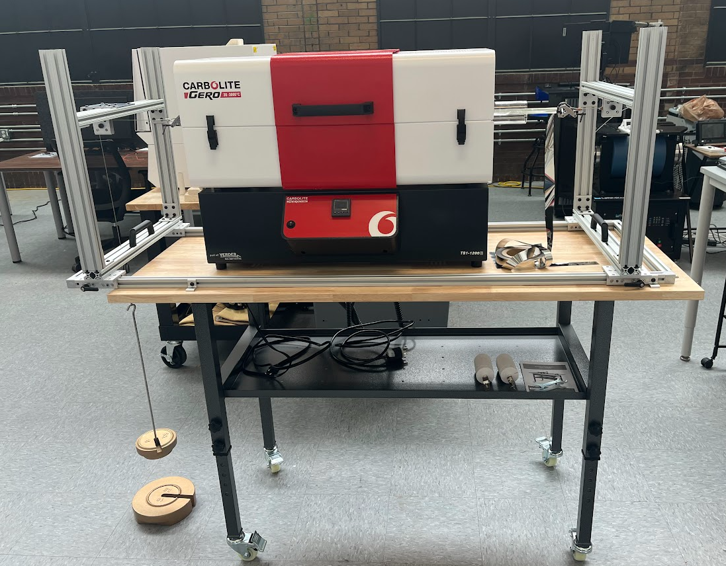
Ultrathin Fe–Si alloy sheets have some benefits in high frequency application such as high magnetic flux density and low-cost fabrication. This project studies the effect of applied tensile stress during annealing on grain growth and primary recrystallization texture formation in FeSi ultrathin alloy with thickness below 0.2mm. A custom tension annealing system was designed and built at Pitt to anneal samples at tensions over 15MPa and over 1000°C. Through tension and temperature optimization grain size and orientation can be tailored. XRD and EBSD was used for phase identification and grain size. Lake Shore VSM 8604 was used for rotational tests, observing the magnetization change at different angles.