-
Milestones
Congratulations to Prof. Paul Ohodnicki on his promotion to Full Professor at the University of Pittsburgh, effective September 1st, 2026! He first joined Pitt more than 25 years ago as a Chancellor’s Scholar of the David C. Frederick Honors College, and reflects that achieving this career milestone at the same University where it all started is humbling. Many thanks to his colleagues, current and former students, and the leadership at the University of Pittsburgh and the Swanson School of Engineering.
Sept. 1st, 2026
-
Awards & Recognition
We are grateful to be honored with a
2026 R&D 100 Award for the
Photonic BMS technology, developed by the University of Pittsburgh in collaboration with Sensible Photonics! The technology applies novel fiber optic sensing to battery systems for enhanced reliability, safety, and operations. Congratulations to the entire team including Drs. Yang-Duan Su and Khurram Naeem as well as Shovan Raj Shrestha. This award represents the fifth year in a row that our research group has won an R&D 100 Award, and the eighth of Prof. Ohodnicki’s career. Many thanks to the Swanson School of Engineering, the DOE Office of Electricity, and the DOE Office of Critical Minerals and Energy Innovation for their support.
Aug. 11th, 2026
-
Events & Talks
The University of Pittsburgh Center for Energy welcomed Honduras Minister of Energy Eduardo Oviedo Garcia and senior officials from the country’s Ministry of Energy and Electric Energy Regulatory Commission to the Energy Innovation Center as part of the International Visitor Leadership Program. Prof. Ohodnicki shared an overview of Pitt’s energy research and capabilities, followed by a tour of work underway at the Energy Innovation Center, and discussion of opportunities for collaborative research involving Pitt, Honduran energy leaders, industry, and U.S. government partners.
Aug., 2026
-
Events & Talks
Elif Balkas, Chief Technology Officer of Wolfspeed, and Troy Beechner, Mission Leader for Electrification at GE Vernova, joined us as keynote speakers at the 2026 Advanced Magnetics for Power and Energy Development (AMPED) Annual Industry Workshop on August 19th. The event is our annual opportunity to showcase the work of our students at the University of Pittsburgh and North Carolina State University and to promote new collaborations between industry and government partners. It was held alongside the first joint PSMA and AMPED magnetics at high frequency workshop on August 18th.
Aug., 2026
-
Grants & Projects
We appreciate the continued support of the Pennsylvania Department of Community & Economic Development through the
Manufacturing PA Innovation Program! In the selected project, “Nanostructuring and Composition Engineering of Novel Ferrite Based Permanent Magnets,” we will partner with Pennsylvania-based manufacturers National Magnetics Group, Inc. and CorePower Magnetics to explore new concepts in rare earth free magnetic materials, directly addressing critical materials and supply chain issues central to resilient energy infrastructure, national security, and regional economic growth.
Jul. 14th, 2026
-
Events & Talks
On June 2nd and 3rd we hosted the 5th annual University of Pittsburgh Infrastructure Sensing Collaboration Workshop at the Energy Innovation Center. With more than 110 registered attendees and representatives from more than 35 different organizations, the meeting was a great success! A robust discussion was held on the importance of distributed sensing, artificial intelligence, and digital twins across infrastructure segments, including distributed fiber optic sensing, dark fibers, the energy-water nexus, the electric power grid, infrastructure interconnectivity, and condition-based monitoring. The meeting was financially supported through the newly formed INSITES Consortium, and co-organized with our collaborators at the National Energy Technology Laboratory.
Jun., 2026
-
Milestones
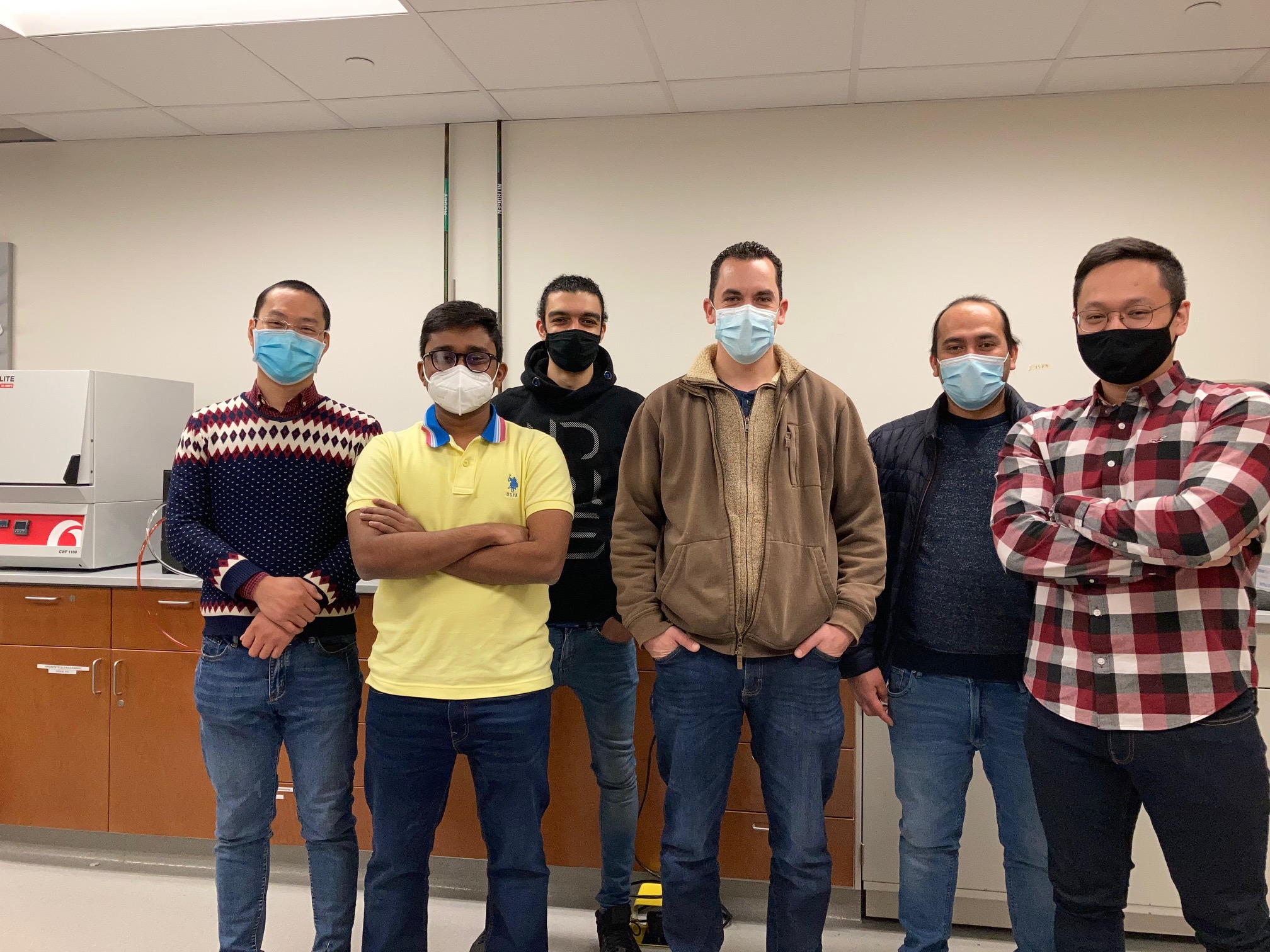
Congratulations to the latest graduates from the Ohodnicki Lab! This year we graduated six students on the basis of their independent research thesis defense, spanning all degree levels and a wide range of disciplines: Joaquin Tristan (BPhil, Electrical Engineering), Jahid Inam Chowdhury (MS, Materials Science and Engineering), and Drs. Suraj Mullurkara, Tyler Paplham, Yang-Duan Su, and Pengdi Zhang. We established the group in 2020 with a vision to invest in the future and foster an interdisciplinary perspective in our engineers, and this is our first group of PhDs headed out into the world.
May, 2026
-
Grants & Projects
ARPA-E Project: we are excited to partner with Prof. Subhashish Bhattacharya on the North Carolina State University led ARPA-E project
DC-GRIDS (Disruptive DC Converters for Grid Resilient Infrastructure to Deliver Secure Energy). Of the $1.9 million grant, approximately $600,000 is allocated to Pitt, where our role in collaboration with Prof. Brandon Grainger will be to model and design medium frequency transformers for the high voltage applications required to support the proposed topology. The project leverages the long-standing collaboration between Pitt and NC State through the AMPED consortium.
Apr. 7th, 2026
-
MilestonesIn the Press
Congratulations to Prof. Ohodnicki on being named permanent Director of the
University of Pittsburgh Center for Energy, a university-wide effort drawing on the energy expertise of roughly 100 faculty members across the Swanson School of Engineering, the Dietrich School of Arts and Sciences, the Law School, the Business School, and the Graduate School of Public and International Affairs.
Mar. 6th, 2026
-
Events & Talks
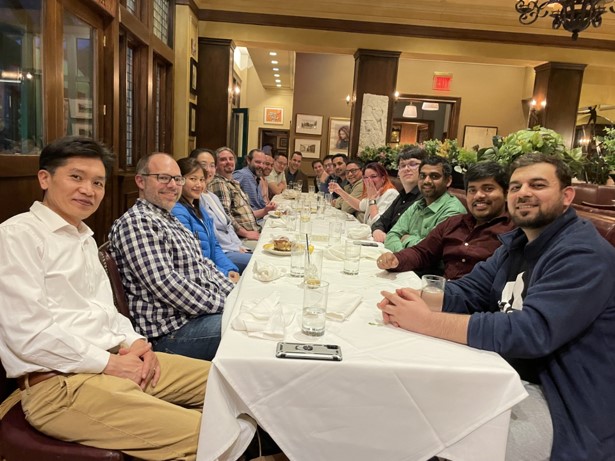
Excellent job by MSE PhD students Lauren Wewer, Yuankang Wang, Bishal Bhandari, and Azhagu Devathai at The Minerals, Metals and Materials Society Annual 2026 meeting! Our group had a total of six presentations spanning soft magnetic nanocomposite ferrites and alloys, additive manufacturing of soft magnetic ferrites for power electronics, and optical materials for fiber optic sensing, including two invited talks by Prof. Ohodnicki. On the last day of the meeting we celebrated with our annual TMS group dinner.
Mar., 2026
-
Publications
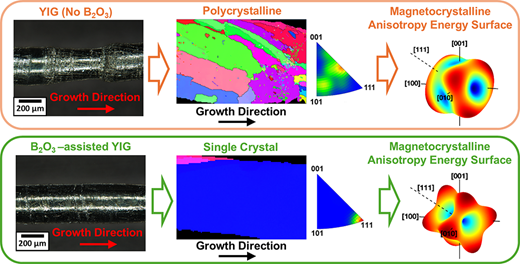
Congratulations to PhD candidate Jun Young Hong on his first authored article, “Effects of B2O3 on the Growth, Structural, and Magneto-Optical Properties of Yttrium Iron Garnet Single-Crystal Fibers,” published in the American Chemical Society journal Crystal Growth & Design! The work was carried out under co-advising by Dr. Dolendra Karki and involved growth of single crystal yttrium iron garnet fiber materials using the laser heated pedestal growth process. The article is open access.
Mar., 2026
-
Events & Talks
Very proud of undergraduates Joaquin Tristan and Jacob Ferrer for the automated magnetic core testing system presented at the PSMA high frequency magnetics workshop preceding the 2026 APEC Applied Power Electronics Conference and Exposition!
Mar., 2026
-
Milestones
Congratulations to Enrico Sarcinelli for successfully defending his PhD proposal entitled “Physics Based Data Analytics for Guided Wave Inspection Based on Distributed Fiber-Optic Sensors” on Wednesday, February 11th! Enrico presented his research applying physics-based modeling and advanced artificial intelligence methods to the interpretation and optimization of distributed fiber optic sensing networks for structural health monitoring of critical energy infrastructure, with applications including pipelines, piping, pressurized vessels, reactors, and storage systems. He is also a co-recipient of the 2024 R&D 100 Award for the UltraSonic Photonics technology. Many thanks to the DOE Office of Nuclear Energy for the enabling support of his work.
Feb. 11th, 2026
-
Milestones
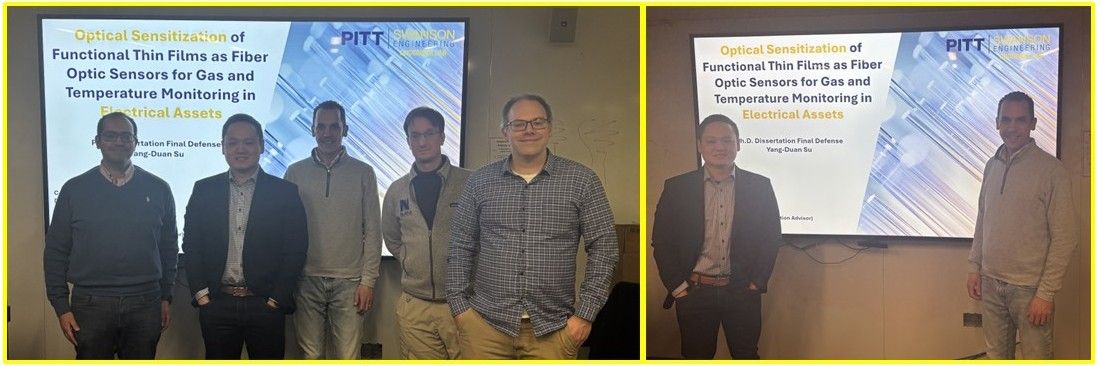
Congratulations to Yang-Duan Su on his successful PhD thesis defense today, February 5th, entitled "Optical Sensitization of Functional Thin Films as Fiber Optic Sensors for Gas and Temperature Monitoring in Electrical Assets"!
Feb. 5th, 2026
-
Milestones
The
INSITES Consortium at the University of Pittsburgh has officially launched its participation agreements and organizational structure to formally engage industry and government partners as of February 2026! INSITES brings together faculty, industry, and government partners in the critically important area of infrastructure sensing and enabling digital technologies including artificial intelligence, digital twins, and distributed networking. If your organization is interested in becoming a founding participant, please reach out to insites@pitt.edu.
Feb., 2026
-
Milestones
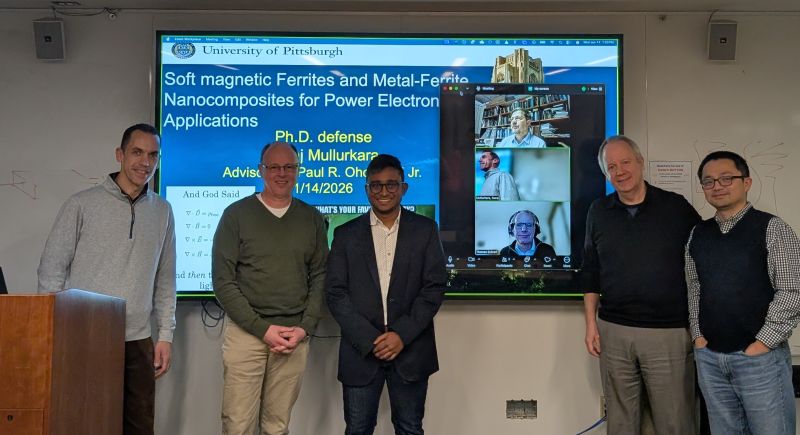
Congratulations to Suraj Mullurkara for successfully defending his PhD thesis entitled "Soft magnetic Ferrites and Metal-Ferrite Nanocomposites for Power Electronic Applications" on Wednesday, January14th!
Jan. 14th, 2026
-
Milestones
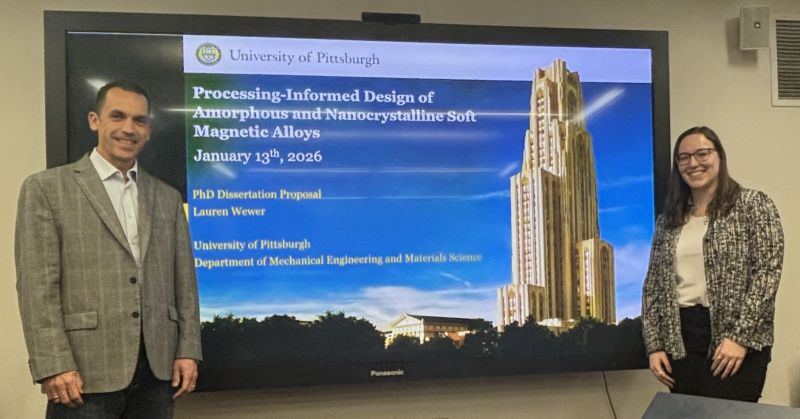
Congratulations to Lauren Wewer for successfully presenting and defending her PhD Dissertation Proposal on Tuesday, January 13th, entitled "Processing-Informed Design of Amorphous and Nanocrystalline Soft Magnetic Alloys"!
Jan. 13th, 2026
-
Milestones
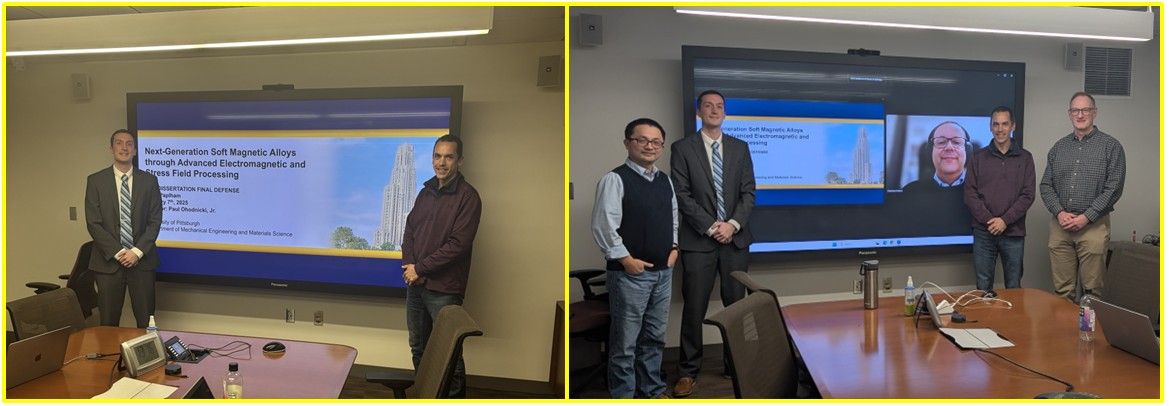
Congratulations to Tyler Paplham on his successful PhD thesis defense on Wednesday January 7th, 2026 entitled "Next Generation Soft Magnetic Alloys Through Advanced Electromagnetic and Stress Field Processing"! Tyler's PhD dissertation was an impressive combination of new advanced manufacturing process development, electromagnetic modeling, custom instrumentation design, and advanced experimentation, including materials processing and characterization of nanocrystalline alloys and bulk magnetic alloys.
Jan. 7th, 2026
-
Publications
First publication of the New Year! Congratulations to Dr. Ying Fang and colleague Dr. Guofeng Wang on a first authored publication in Acta Materialia applying a new computational method for first principles calculations of magnetic spin states and cation site occupation to NiZn-ferrite magnetic spinel systems. The technique combines density functional theory with machine learning, enabling rapid calculations for complex systems, and opens new pathways for computational design of novel magnetic ferrites. We are grateful to the National Science Foundation, the Office of Naval Research, and the AMPED consortium industry partners for supporting this research.
Jan., 2026
-
Publications
Take a look at the latest publication first authored by Dr. Tyler Paplham in the Journal of Magnetism and Magnetic Materials, on the temperature stability of induced magnetic anisotropy in novel high temperature nanocrystalline soft magnetic alloys targeted for extreme temperature applications. Congratulations to Tyler and co-authors Alex Leary and Yuankang Wang! The work was supported by the NASA HOTTech program and the AMPED Consortium, in collaboration with NASA Glenn Research Center, Raytheon Technologies, and CorePower Magnetics.
Jan., 2026
-
Awards & Recognition
It was a great privilege to officially receive
two R&D 100 Awards for the eMission Critical Sensor and VulcanAlloy technologies on behalf of the University of Pittsburgh and the development teams. VulcanAlloy is a new series of high temperature nanocrystalline soft magnetic alloys capable of continuous operation at temperatures approaching 500°C, and the eMission Critical Sensor is a novel concept in emission-based sensing of critical metals and materials. Many thanks to all of the collaborators at the National Energy Technology Laboratory, NASA Glenn Research Center, CorePower Magnetics, Raytheon Technologies, and Sensible Photonics!
Nov., 2025
-
Grants & Projects
We are excited to announce that the INSITES Consortium received a 2025 Momentum Funds Scaling Award from Pitt Research! This support will accelerate the establishment of the consortium and seed several thrusts on distributed sensing, digital twins, dark fibers, and stakeholder engagement, in collaboration with partners at the National Energy Technology Laboratory and the City of Pittsburgh. The interdisciplinary effort engages faculty across the School of Computing and Information, the Dietrich School of Arts and Sciences, and the Swanson School of Engineering.
Nov., 2025
-
Awards & Recognition
Prof. Ohodnicki had the privilege of representing the CorePower Magnetics team in receiving the ASM Engineering Materials Achievement Award. We are grateful for the critical support from ARPA-E that made it possible, as well as funding from the DOE Office of Critical Minerals and Energy Innovation, the DOE Office of Electricity, and the Department of Defense over the years. Sustained federal funding over more than a decade has played a critical role in developing the technology and workforce required to commercialize today.
Nov., 2025
-
Milestones
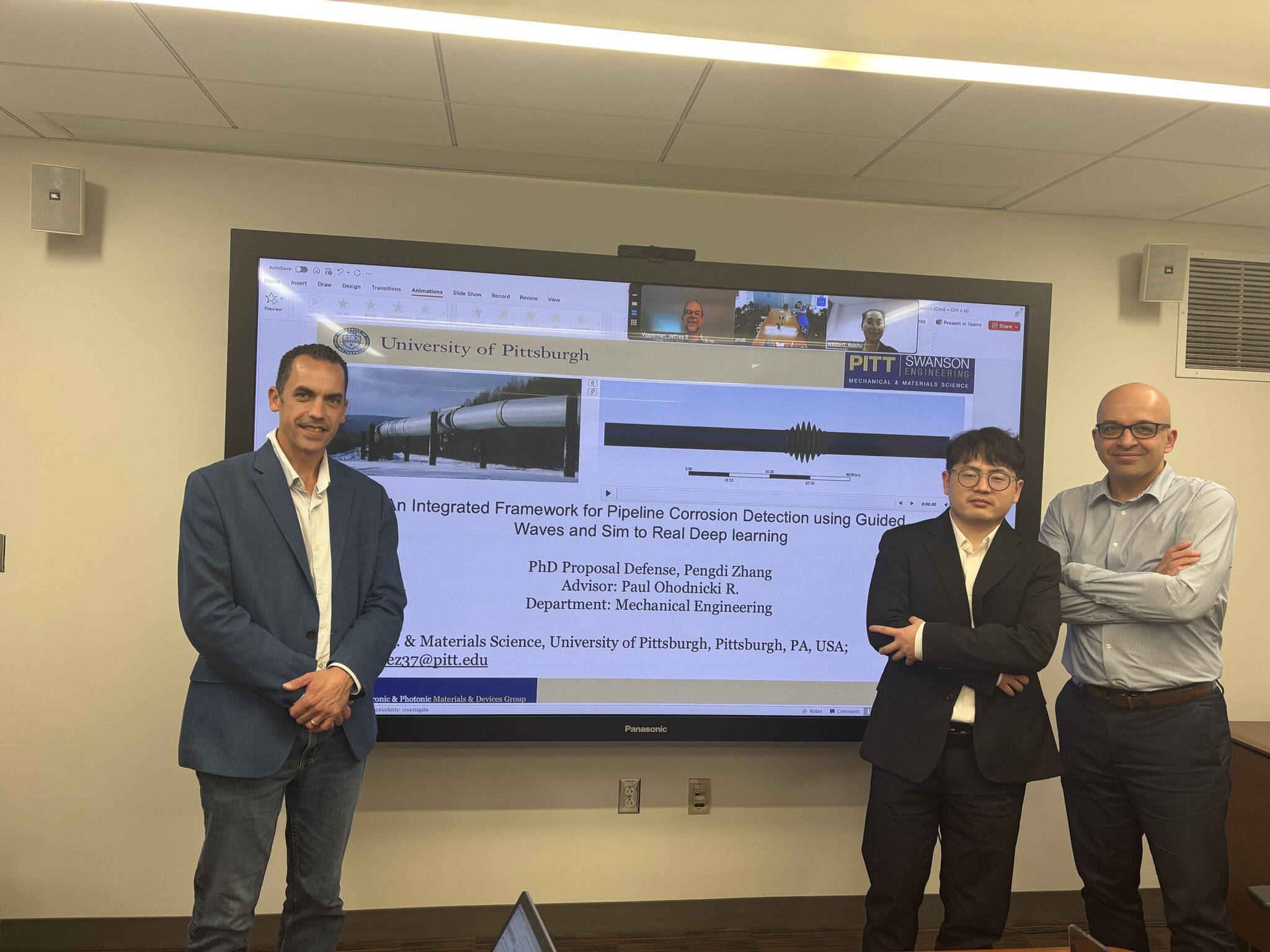
Congratulations to PhD student Pengdi Zhang on his successful PhD thesis defense! His thesis is entitled "An Integrated Framework for Pipeline Corrosion Detection using Guided Waves and Sim-to-Real Deep Learning". In his research, Pengdi combined high fidelity physics-based modeling, reduced order modeling, and artificial intelligence-based framework methods to develop and demonstrate a method for efficient interpretation of distributed optical fiber sensing data for the use case of corrosion detection. His work was rigorous and paves the way for future research and maturation of the technique for generalized structures and applications.
Oct. 8th, 2025
-
Awards & RecognitionIn the Press
Many thanks to Technical.ly for including Prof. Ohodnicki among the 15 RealLIST Innovators of 2025, an impressive and accomplished group of people in Pittsburgh pushing science and technology forward.
Sept., 2025
-
Events & Talks
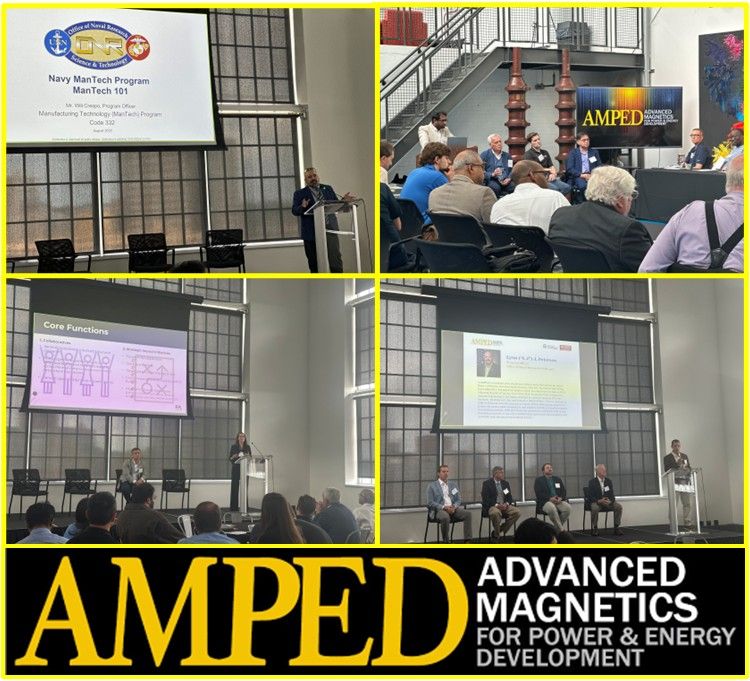
Advanced Magnetics for Power and Energy Development Consortium held another successful industry workshop on August 13th & 14th at Energy Innovation Center!
Aug. 14th, 2025
-
Events & Talks
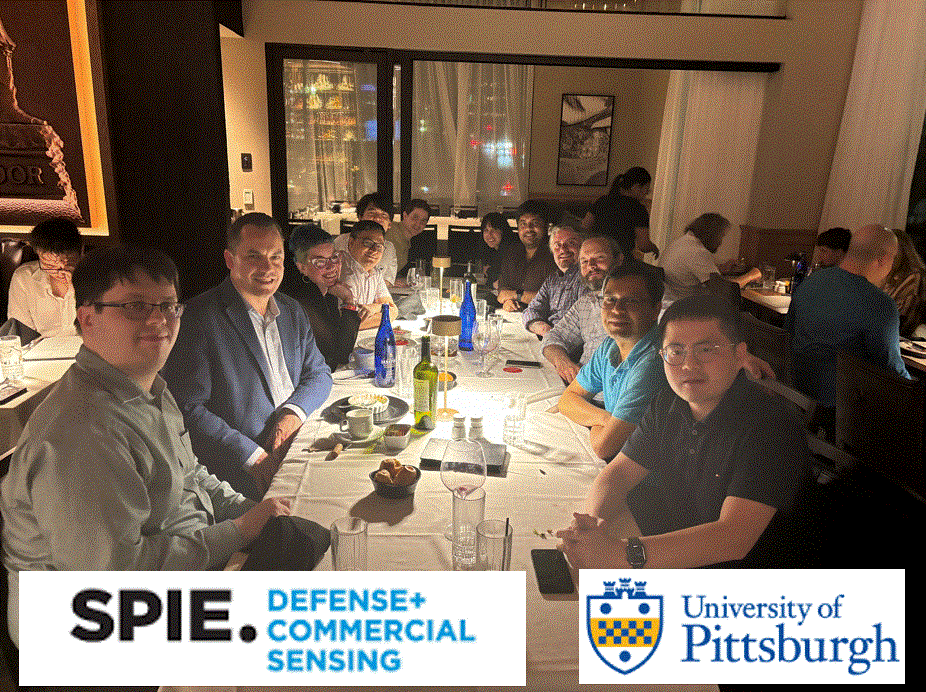
Congratulations to the entire research team from the University of Pittsburgh and the National Energy Technology Laboratory for another successful and productive SPIE Defense and Commercial Sensing 2025 meeting! The Ohodnicki Lab authored / co-authored a total of 8 collaborative presentations with NETL colleagues and celebrated a successful meeting with our annual joint dinner!
May, 2025
-
Milestones
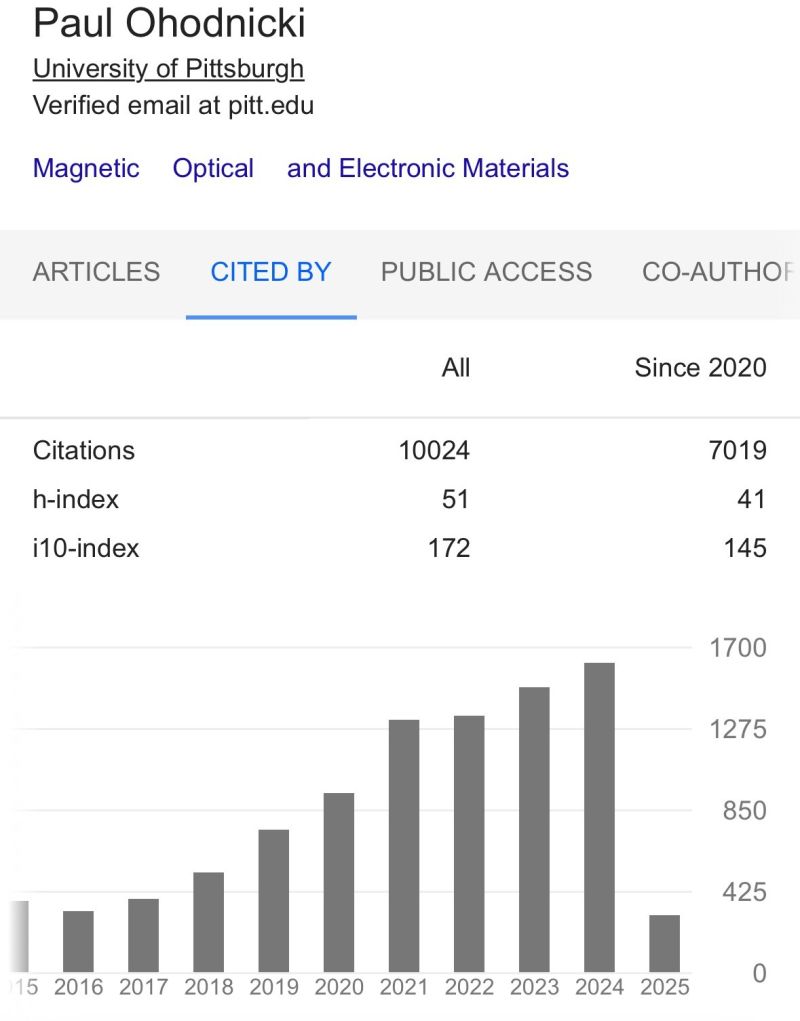
A career milestone... >10,000 citations on Google Scholar this week (https://lnkd.in/ej83CyHS)! While it's certainly not the only or even the best measure of scientific contribution, it is one to acknowledge and celebrate... particularly from the perspective that impactful science and engineering requires an entire community. Many thanks to the students, postdoctoral researchers, and collaborators over the years for their contributions!
March, 2025
-
Events & Talks
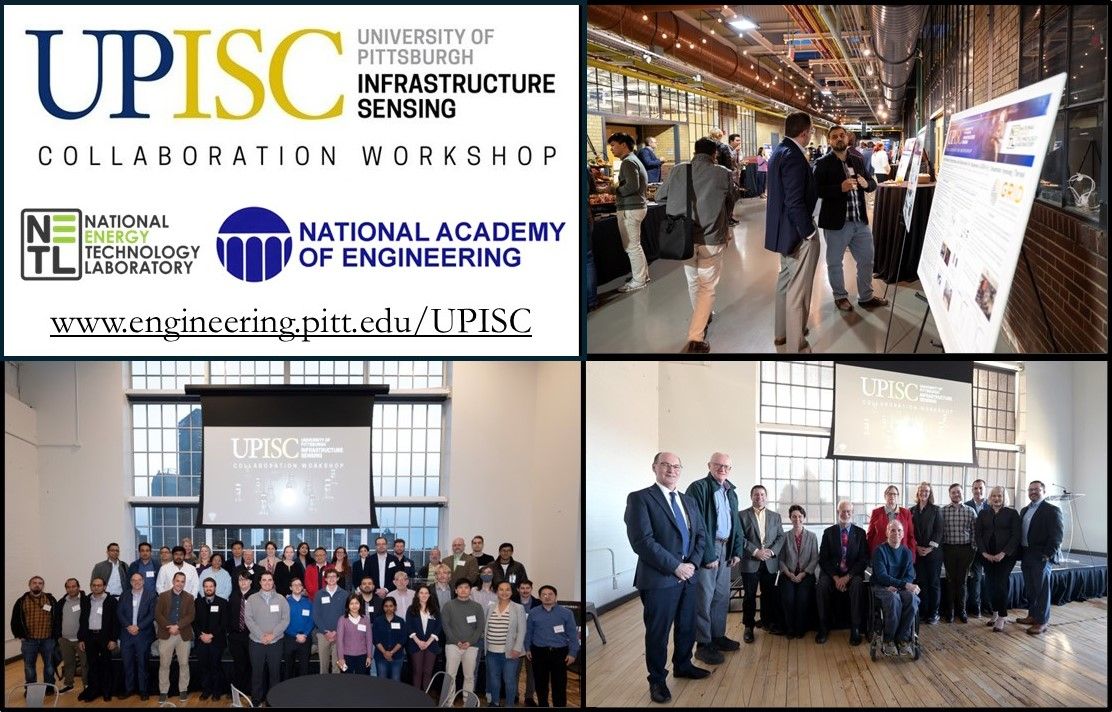
The University of Pittsburgh Infrastructure Sensing Collaboration (UPISC) Workshop organized by Prof. Ohodnicki ended fruitfully with collaboration from National Labs and industry partners.The 2024 University of Pittsburgh Infrastructure Sensing Collaboration workshop (https://lnkd.in/g6rM67fU) was a great success with 120 registered attendees and an incredibly impressive lineup of invited speakers and panelists!
Nov., 2024
-
Awards & Recognition
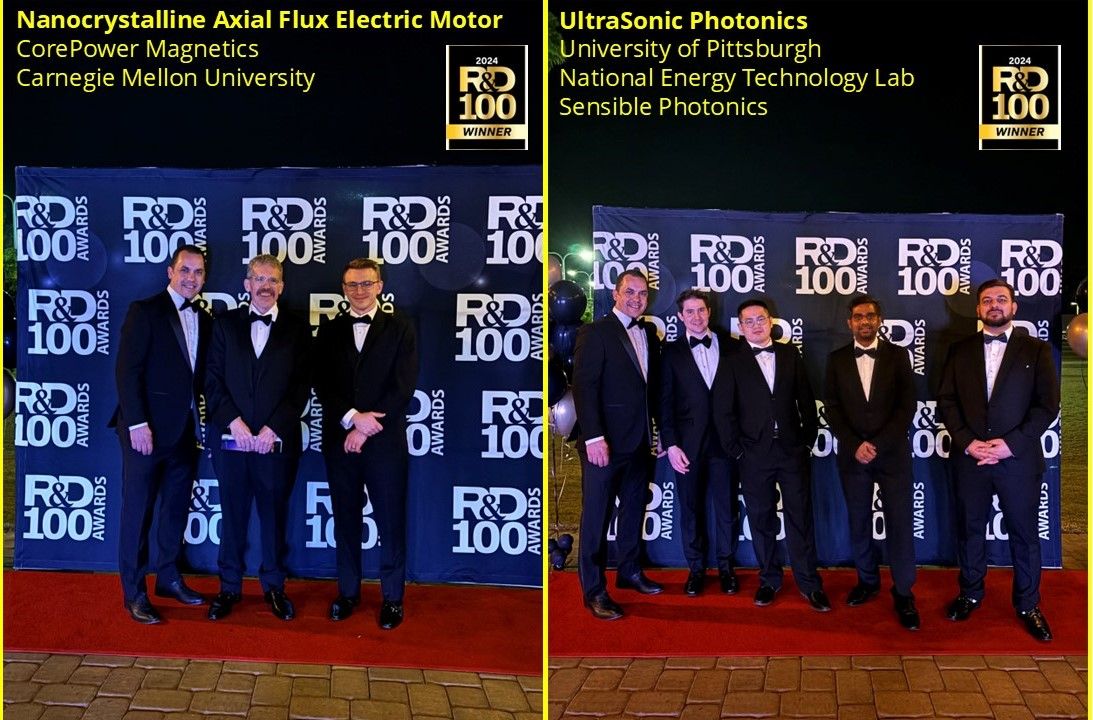
"Our Research Group has won the 2024 R&D100 award for "Nanocrystalline Axial Flux Electric Motor & UltraSonic Photonics"
Aug. 24, 2024
-
Awards & Recognition
Our Fiber Optic Sensing Group has won the 2024 R&D100 award for "UltraSonic Photonics"!
Aug. 24, 2024
-
Events & Talks
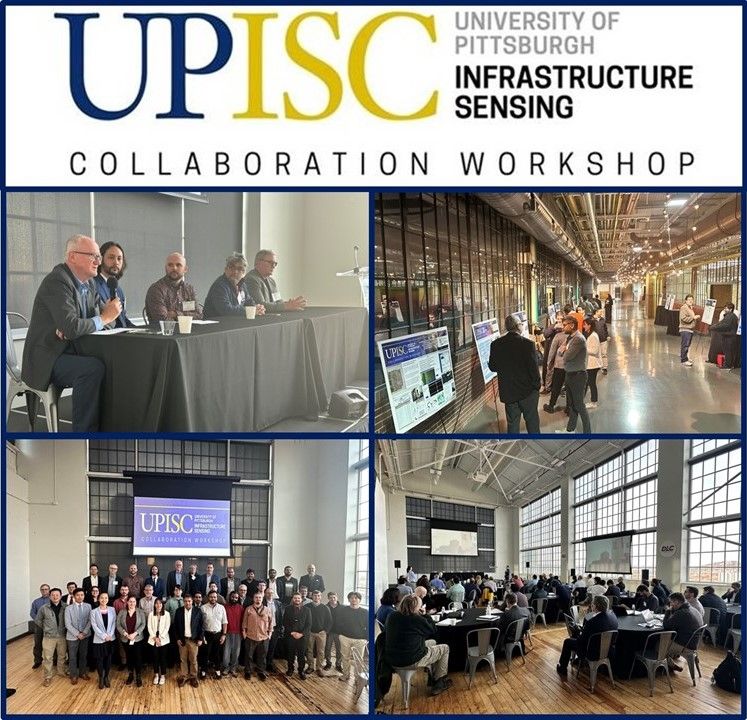
Many thanks to the attendees of the 2023 Annual University of Pittsburgh Infrastructure Collaboration Workshop at the Energy Innovation Center! We had more than 80 registered attendees and the agenda was full of exceptionally impressive speakers and panelists from local and federal government, industry, and academia.
Dec., 2023
-
Awards & Recognition
In collaboration with NETL, the Fiber Optic Sensing Group at Ohodnicki Lab has won the 2023 R&D100 award for real-time multi-parametric fiber optic sensors towards power transformer resilience!
Aug. 29, 2023
-
Publications
Congratulations to PhD student Tyler Paplham for his very first peer-reviewed manuscript published in
Journal of Materials Research!
Dec., 2022
-
Awards & Recognition
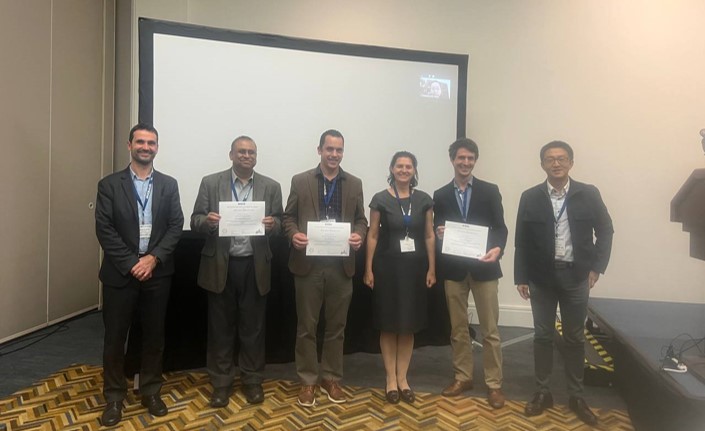
Prof. Ohodnicki and colleagues received Best Paper Award from 2022 Industry Applications Society (IAS) Electric Machines Committee (EMC) for the paper “Permeability Engineered Soft Magnetics for Power Dense Energy Conversion” on ECCE.
Oct. 14, 2022
-
Events & Talks
Prof. Ohodnicki delivered tutorial talk and two invited panel sessions on Advanced Magnetic Designs for Electrification at
ECCE 2022 in Detroit, Michigan.
Oct. 9, 2022
-
Publications
A new Accelerator Study on Additive Manufacturing of Energy-Related Functional Materials chaired by Prof. Ohodnicki has been released at
The Minerals, Metals & Materials Society (TMS).
Oct., 2022
-
Events & Talks
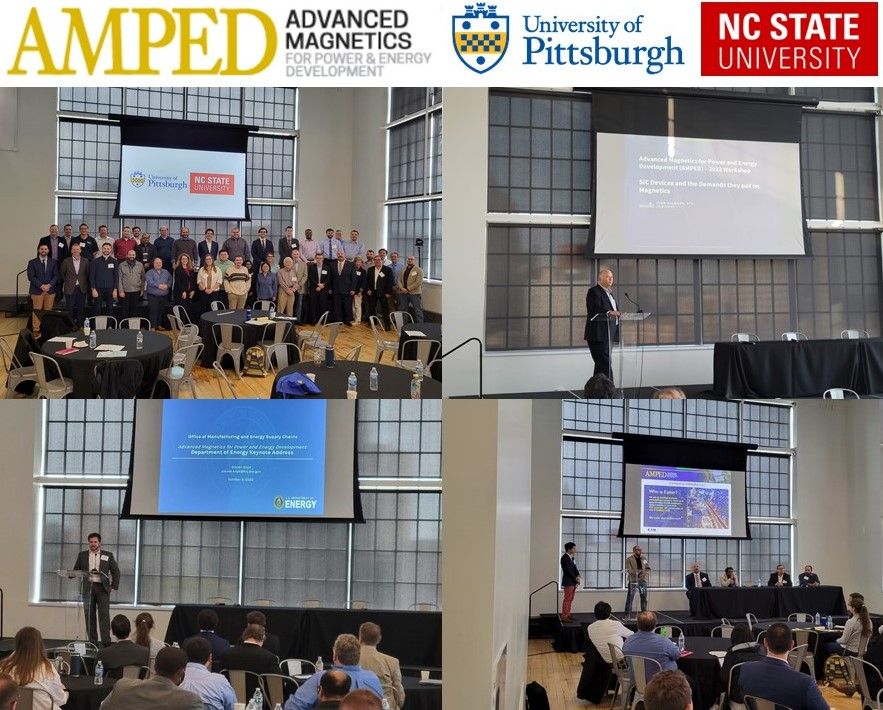
Led by Prof. Ohodnicki, we successfully wrapped up our annual in-person Advanced Magnetics for Power and Energy Development (AMPED) consortium with NSF at the Energy Innovation Center, Pittsburgh.
Oct., 2022
-
Awards & RecognitionIn the Press
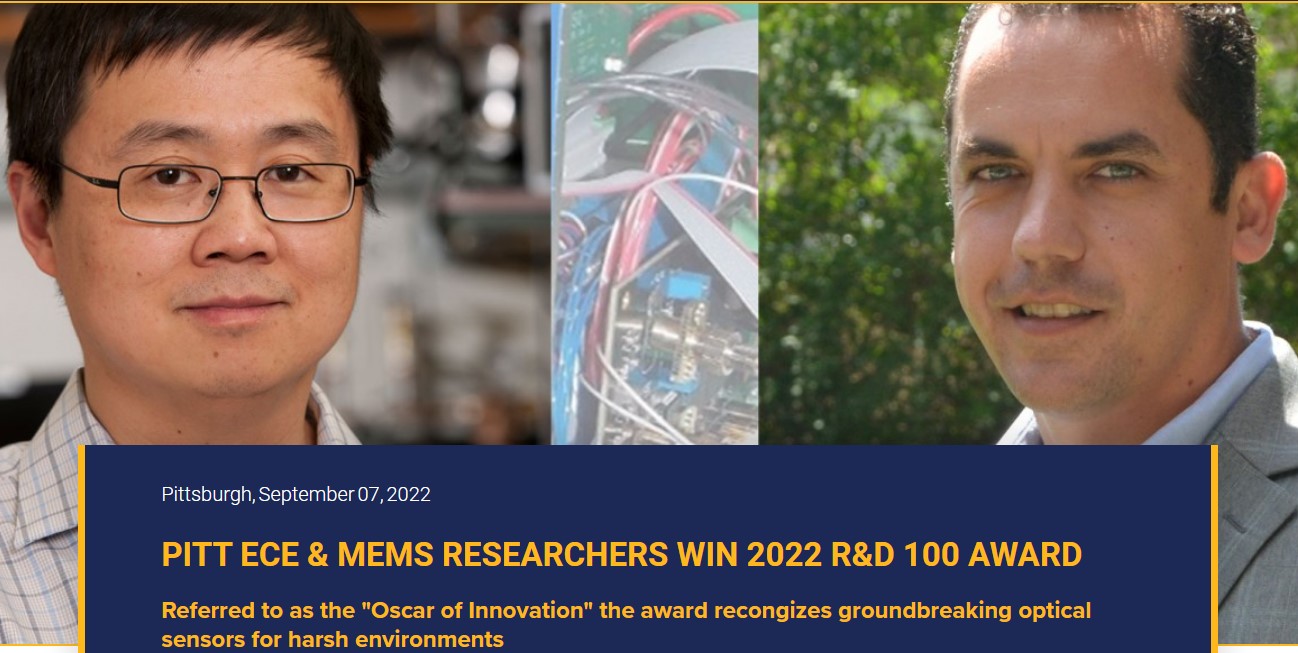
Prof. Ohodnicki was one of the recipients of 2022 R&D 100 Award from R&D Magazine for his previous research on High Spatial Resolution Optical Sensors for Harsh Environments led by Prof. Kevin Chen at University of Pittsburgh.
Sept. 07, 2022 (Source: Virtual Newsroom, Pitt Swanson School of Engineering, Retrieved from: https://news.engineering.pitt.edu/pitt-ece-mems-researchers-win-2022-rd-100-award/)
-
Events & Talks
Prof. Ohodnicki delivered an invited talk on FUSION OF DISTRIBUTED FIBER OPTIC SENSING, ACOUSTIC NDE, AND ARTIFICIAL INTELLIGENCE FOR INFRASTRUCTURE MONITORING at
OFS 2022 in Alexandria, VA.
Sept. 2, 2022
-
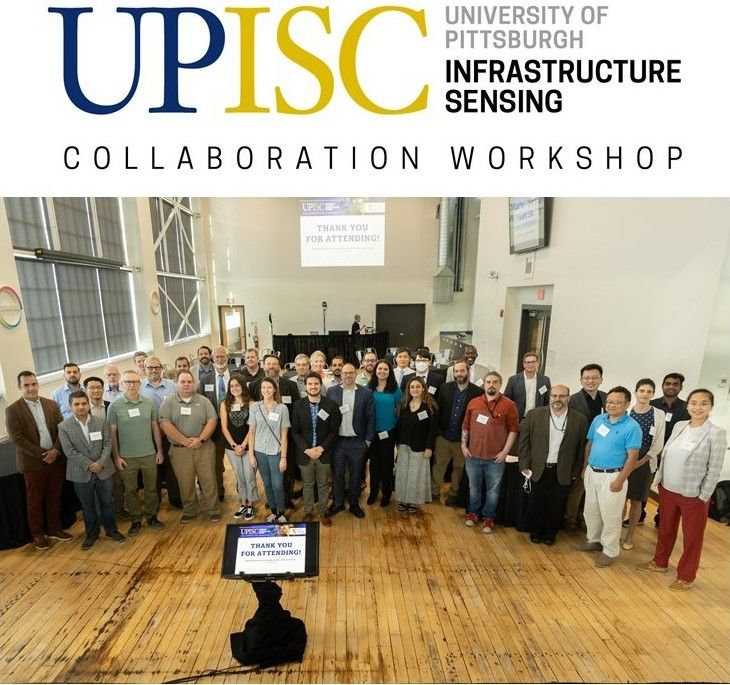
Events & Talks
The first University of Pittsburgh Infrastructure Sensing Collaboration (UPISC) Workshop organized by Prof. Ohodnicki ended fruitfully with collaboration from National Labs and industry partners.
Sept., 2022
-
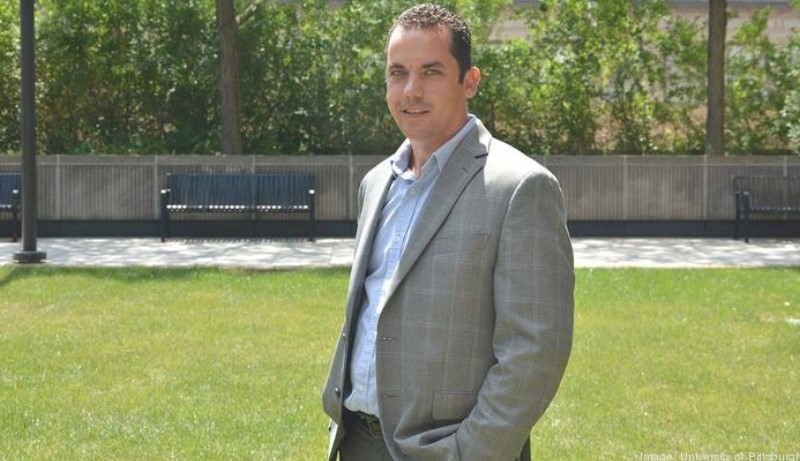
Awards & RecognitionIn the Press
Prof. Ohodnicki was mentioned as "20 People to Know in Energy" by Pittsburgh Business Times in recognition of his numerous works on power magnetics for energy applications spanning from academics to industry sectors.
Aug. 17, 2022 (Source: Pittsburgh Business Times, Retrieved from: https://www.bizjournals.com/pittsburgh/news/2022/08/17/20-people-to-know-energy-paul-ohodnicki.html?b=1660715771%5E22125518)
-
Events & Talks
Prof. Ohodnicki delivered an invited talk on Nanocrystalline Soft Magnets at
25th Soft Magnetic Materials Conference in Grenoble, France.
May. 5, 2022
-
Awards & Recognition
Congradulations to Prof. Ohodnicki for his
Student Choice Instructor of the Year Award at the Swanson School of Engineering!
May. 1, 2022
-
Awards & RecognitionPublications
Congradulations to Yang-Duan Su, one of our Ph.D. students, on his journal review being named the Editor's Choice Article on MDPI
Sensors Journal!
Mar. 10, 2022
-
Events & Talks
Recently, Prof. Ohodnicki delivered a talk on the topic "Application of Fiber Optic Sensing for Infrastructure Monitoring" at the Society for Analytical Chemists of Pittsburgh & Spectroscopy Society of Pittsburgh.
Feb. 12, 2022
-
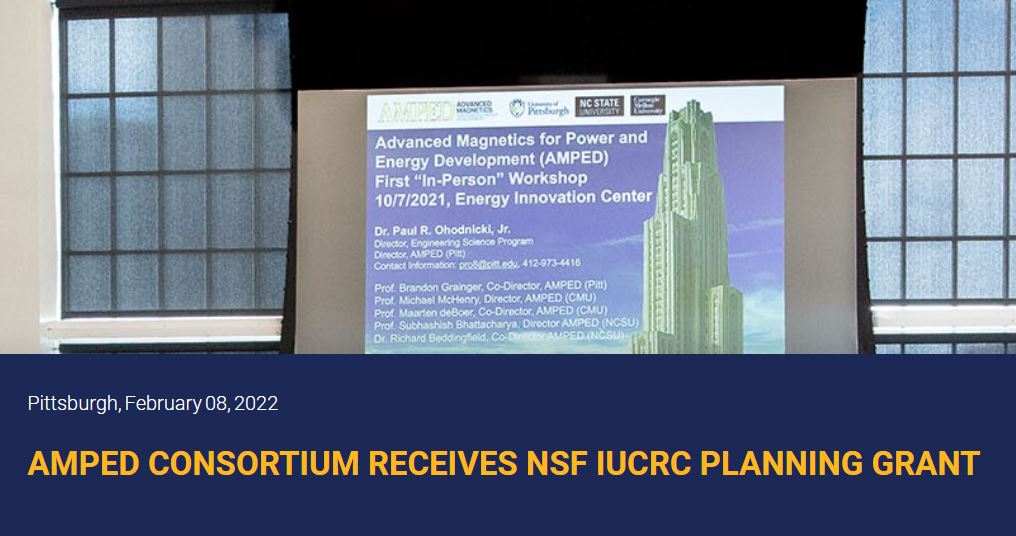
Grants & ProjectsIn the Press
Our collaboration with the AMPED Consortium has been granted $60,000 for planning from the National Science Foundation (NSF). Read full article above!
Feb. 08, 2022 (Source: Virtual Newsroom, Pitt Swanson School of Engineering, Retrieved from: https://news.engineering.pitt.edu/amped-consortium-receives-nsf-iucrc-planning-grant/)
-
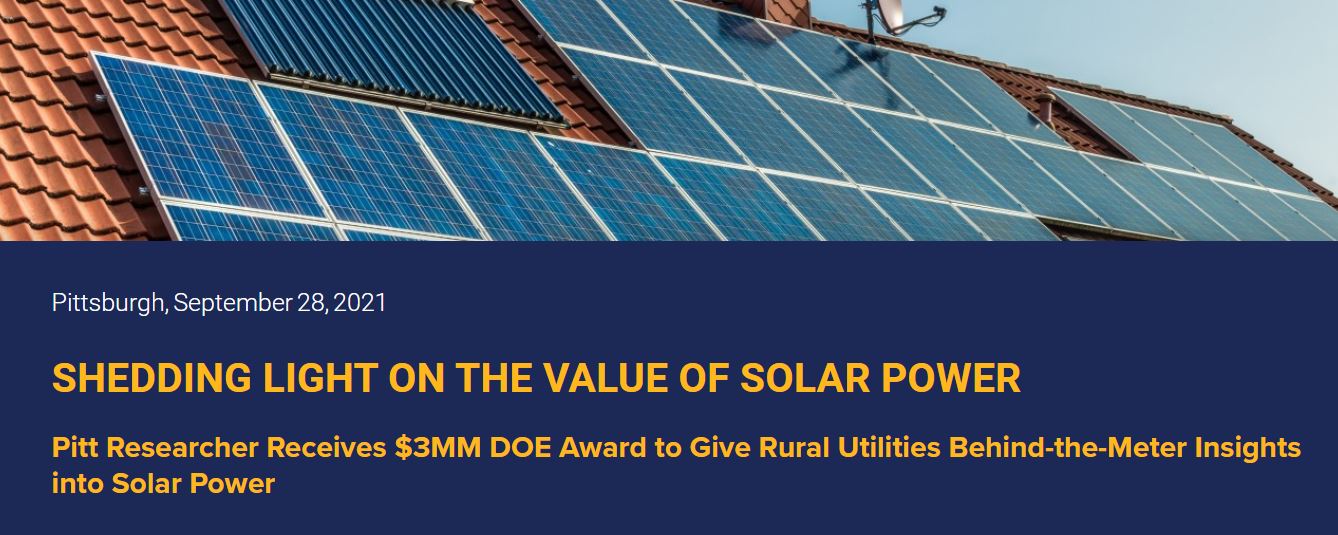
Grants & ProjectsIn the Press
Our group receives $ 3 million from DOE Solar Energy Technologies Office to leverage our expertise in low-cost fiber optics in improving energy monitoring of solar power utilities. Read full article above!
Oct. 17, 2021 (Source: Virtual Newsroom, Pitt Swanson School of Engineering, Retrieved from: https://news.engineering.pitt.edu/shedding-light-on-the-value-of-solar-power/)
-
Grants & ProjectsIn the Press
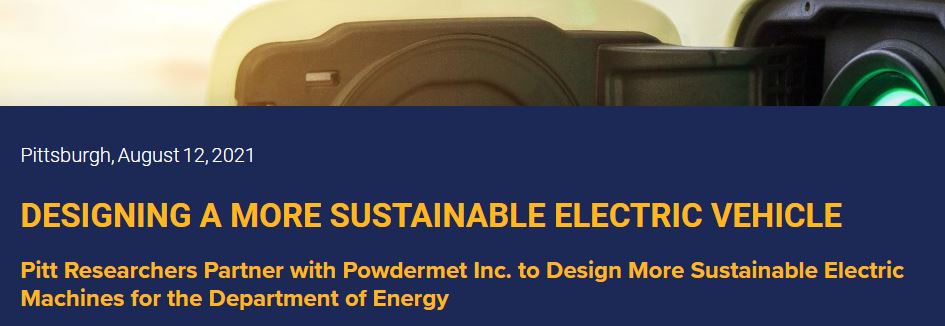
We are excited about our recent partnership with Powdermet Inc. in a 200K DOE project to advance EV motor drive with novel nanomaterials! Read full article above!
Aug. 12, 2021 (Source: Virtual Newsroom, Pitt Swanson School of Engineering, Retrieved from: https://news.engineering.pitt.edu/designing-a-more-sustainable-electric-vehicle/)
-
Grants & ProjectsIn the Press
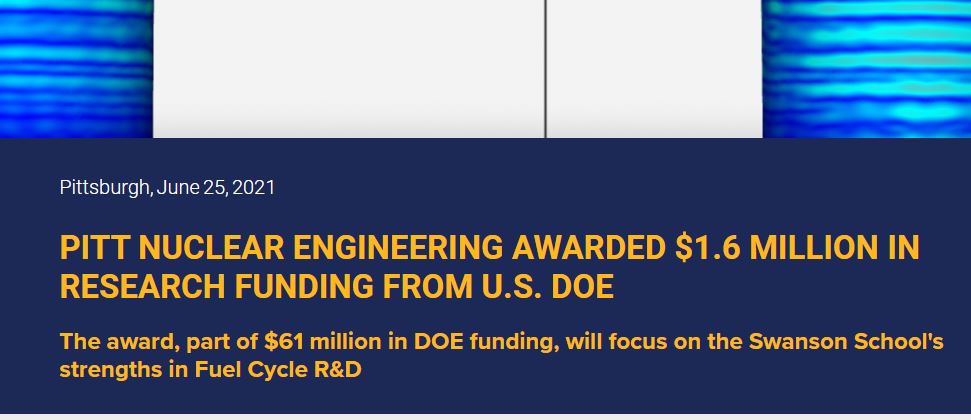
We appreciate our funder from DOE Office of Nuclear Energy and collaborators from PNNL and Fluor Corporation for the opportunity to advance fiber optic-based nuclear waste storage monitoring enabled by physics-based AI! Read full article above!
Jun. 25, 2021 (Source: Virtual Newsroom, Pitt Swanson School of Engineering, Retrieved from: https://news.engineering.pitt.edu/pitt-nuclear-engineering-awarded-16-million-in-research-funding-from-us-doe/)
-
MilestonesIn the Press
Our collaborator CorePower Magnetics, co-founded by Prof. Ohodnicki, has recently finalized exclusive intellectual property licenses with CMU and NETL. Read full article above!
Jun. 01, 2021 (Source: EurekAlert!, American Association for the Advancement of Science., Retrieved from: https://www.eurekalert.org/pub_releases/2021-06/coec-cma060121.php)
-
Grants & ProjectsIn the Press
Prof. Ohodnicki receives $820K from Office of Naval Research for work on ultra-high frequency soft magnet to advance power electronics. Read full article above!
May. 14, 2021 (Source: EurekAlert!, American Association for the Advancement of Science., Retrieved from: https://www.eurekalert.org/pub_releases/2021-05/uop-baf051421.php)
-
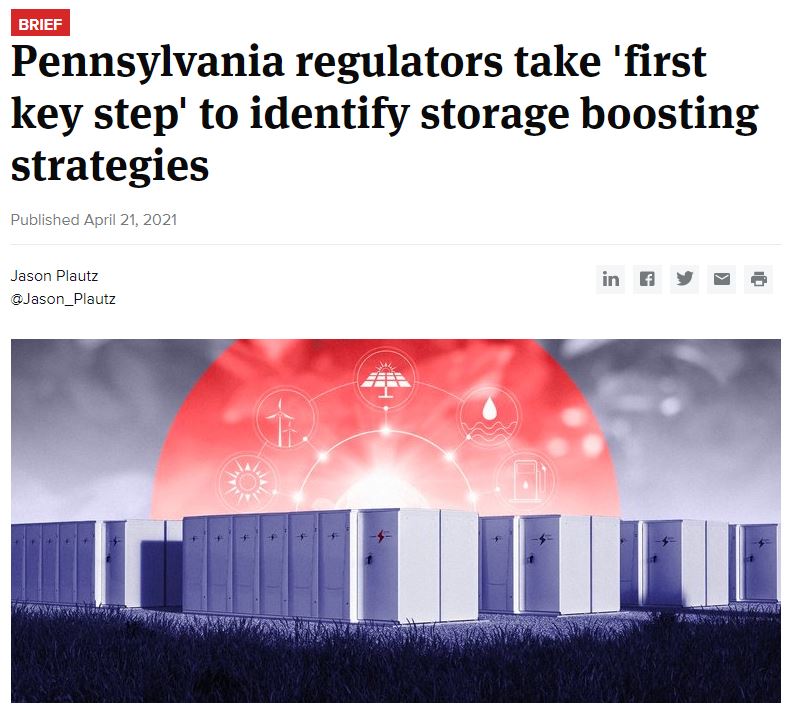
In the Press
Prof. Ohodnicki gave suggestions on energy storage and "solar plus storage" deployment in Pennsylvania on Utility Dive. Read full article above!
Apr. 21, 2021 (Source: Jason Plautz, Utility Dive, "Pennsylvania regulators take 'first key step' to identify storage boosting strategies. 2021" Retrieved from: https://www.utilitydive.com/news/pennsylvania-regulators-take-first-key-step-to-identify-storage-boosting/598744/)
-
Awards & Recognition
Prof. Ohodnicki has become one of the faculty recipients for the John C. Mascaro Fellowship on the topic "Electric Motor Materials and Designs for a Sustainable Electrified Future." Congratulations!
Apr. 19, 2021
-
Publications
Read Dr. Ahmed Talaat, Suraj M.V. and Prof. Ohodnicki's latest review article published in
Journal of Alloys and Compounds on soft magnetic metal and inorganic oxide nanocomposites for power applications!
Mar. 20, 2021
-
Milestones
Congratulations to Dr. Bo Liu on his new position as a Principal Investigator at Zhejiang Lab, China. With him being one of the first members of the Ohodnicki Lab, we would like to acknowledge and appreciate his significant contribution to the design and build-up of our LHPG system, and we wish him all the best in his future endeavors. Congrats Bo!
Feb. 27, 2021
-
Publications
Yang-Duan Su, Dr. Chenhu Su and Prof. Ohodnicki's review is now published and available in
Sensors addressing the fiber optic sensing technologies in battery management systems and energy storage applications.
Feb. 17, 2021
-
Grants & ProjectsIn the Press
Congratulations to Prof. Ohodnicki on receiving the $ 1 million ARPA-E funding and award for fiber optic sensing innovations. Read full article above!
Jan. 27, 2021 (Source: EurekAlert!, American Association for the Advancement of Science. Retrieved from: https://www.eurekalert.org/pub_releases/2021-01/uop-prr012721.php)
-
Grants & Projects
DARPA Project: Prof. Ohodnicki is now the University of Pittsburgh PI for a recently announced Phase I project selection from the Defense Advanced Research Projects Agency (DARPA) entitled “ Development and Commercialization of Permeability Engineered Soft Magnetic Nanocomposites for MW-Class Power Dense Energy Conversion”. The Ohodnicki Lab will collaborate with colleagues at the University of Pittsburgh, Carnegie Mellon University, and CorePower Magnetics to develop and demonstrate new high frequency magnetic materials and component technologies for advanced Department of Defense applications.
Nov. 16, 2020
-
Grants & Projects
ARPA-E Project: Prof. Ohodnicki is now the PI for a $1M award under the ARPA-E REPAIR program, on a project entitled “ “Innervated” Pipelines: A New Technology Platform for In-Situ Repair and Embedded Intelligence ”. The Ohodnicki Lab will collaborate with Prof. Kevin Chen and Prof. Jung-Kun Lee at the University of Pittsburgh, as well as Drs. Kayte Denslow and Glenn Grant from the Pacific Northwest National Laboratory, in the area of embedded fiber optic sensors and in-situ repair of natural gas pipelines.
Nov. 16, 2020
-
Events & Talks
Prof. Ohodnicki and Dr. Ahmed Talaat delivered their talks on
Laser Processing and
Rapid Thermal Processing of Amorphous and Nanocrystalline Soft Magnetic Alloys at the MS&T 2020 event on Nov. 4, 2020.
Nov. 4, 2020
-
Publications
Prof. Ohodnicki's paper on soft magnetic FeNi-based nanocomposites was recently accepted and published in
Journal of Materials Research.
Oct. 29, 2020
-
Events & Talks
Prof. Ohodnicki delivered a seminar for the Pittsburgh Quantum Institute (PQI) seminar series about his research on fiber optic sensors for energy transport and storage applications and passive wireless sensing.
Sept. 24, 2020
-
Events & Talks
Prof. Ohodnicki spoke at the ECE graduate seminar on his recent advanced works on functional nanostructured materials and devices for emerging applications in the energy and defense sector.
Sept. 23, 2020
-
Publications
Dr. Ahmed Talaat, Ph.D. student Suraj Venkateshwaran and Prof. Ohodnicki published a review in
Journal of Alloys and Compounds on electromagnetic assisted thermal processing of soft magnetic alloys.
Aug. 11, 2020